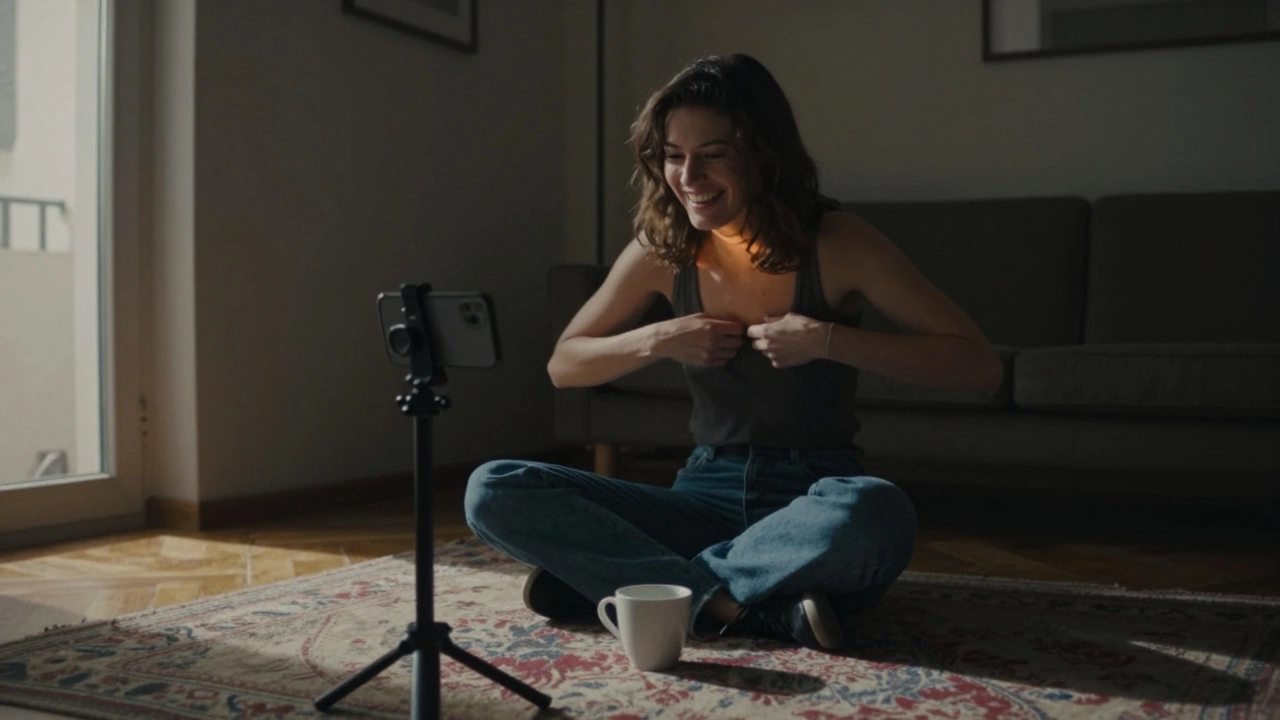
It started with a clip. Not a big one. Just a 37-second video of a woman laughing while adjusting her top, filmed on a phone in a dimly lit apartment in Marseille. That clip, uploaded anonymously in 2007, became one of the first viral moments on PornHub. It wasn’t the sex that made it spread-it was the way she looked at the camera like she knew exactly what she was doing. No shame. No apology. Just money. And that’s when things changed.
Before PornHub, most adult content was hosted on private sites with paywalls, hidden URLs, and sketchy billing. Then came Money Shot, the documentary-style film that didn’t just show sex-it showed the people behind it. The woman in that Marseille clip? Her name was Léa. She wasn’t an actress. She wasn’t even looking for fame. She just needed rent money. And she found it by saying yes to a stranger with a camera. Today, you can still find her on a site called scort a paris, where she posts weekly updates about her life in Paris, her cats, and the occasional client who still remembers her from that first video.
How PornHub Changed the Game
PornHub didn’t invent online porn. It didn’t even invent free porn. What it did was remove every barrier between desire and access. No subscriptions. No logins. No credit card required. Just a search bar and a click. By 2012, it was handling more traffic than Netflix. By 2018, it was streaming over 100 million videos per day. And most of those videos? Filmed by people who had no other way to make ends meet.
Before the internet, sex workers relied on street corners, phone lines, and classified ads. Then came Backpage. Then came OnlyFans. But PornHub was different. It didn’t ask for permission. It didn’t vet anyone. It just took the content-and the money-and split it 50/50. For many, that was the first time they’d ever seen a direct payout from their own labor.
The Real Money Shot
The term "money shot" used to mean one thing: the climax, the final frame, the moment the camera cuts away. But on PornHub, the real money shot was the moment a sex worker saw their first payment notification. $12.78. $43.50. $217. It wasn’t glamorous. It wasn’t celebrity. It was survival. And for thousands, it was the only way out of debt, abuse, or homelessness.
One woman from Lyon posted her first video in 2015. She was 21. Her father had just died. Her mother was in a nursing home. She had no savings. She had one laptop, a ring light, and a VPN. She called her channel "ecort girl paris"-a misspelling she didn’t fix because it made her easier to find. Within six months, she was paying her mother’s bills. By year two, she bought a small apartment in the 13th arrondissement. She still posts twice a week. She doesn’t use the word "prostitute." She says, "I’m a content creator."

Why the Industry Didn’t Collapse
People thought platforms like OnlyFans would kill PornHub. They thought regulation, public outrage, or AI-generated content would shut it down. None of that happened. Why? Because the demand didn’t change. The people behind the camera didn’t disappear. They just got smarter.
Many sex workers now use PornHub as a portfolio. They post free clips to build an audience, then redirect viewers to their own sites, Telegram channels, or Patreon pages. Some earn $10,000 a month from just 300 regular subscribers. Others use the platform to fund art projects, therapy, or travel. One man in Lyon turned his channel into a nonprofit that helps homeless LGBTQ+ youth find housing. He posts videos of himself reading poetry between scenes. His most popular clip? A 12-minute monologue about his first client. It’s been viewed over 4.2 million times.
The Dark Side Nobody Talks About
It’s easy to romanticize this. To call it empowerment. To say everyone’s a boss now. But the truth is messier. There are girls in Bucharest who were lured to Paris with promises of modeling jobs, then forced to film under threat. There are teens who got caught in revenge porn loops. There are men who upload footage of non-consensual acts and disappear before anyone can trace them.
PornHub’s moderation team has 300 people. They review 1.2 million videos a week. They take down 98% of reported content within 48 hours. But they can’t catch everything. And they don’t always know who’s being exploited. The system is built on volume, not verification. That’s the flaw.
One woman in Marseille told me she was raped on camera in 2019. She didn’t report it for two years because she was afraid no one would believe her. When she finally did, PornHub removed the video-but didn’t ban the uploader. He was using a burner account. He had no name. No ID. No trace. She still gets messages from strangers who say they "know her" from that video. She doesn’t answer them.
What’s Left Now?
Today, PornHub is owned by MindGeek, a company that also runs Brazzers, RedTube, and YouPorn. It’s not a startup anymore. It’s a corporation. And corporations don’t care about stories. They care about metrics. Views. Watch time. Retention. The human element? That’s just data.
But the people? They’re still there. Filming. Posting. Earning. Surviving. Some use it as a stepping stone. Others make it a career. A few even write books about it. One former performer from Lyon published a memoir last year called "The Camera Doesn’t Lie-But the Algorithm Does." It’s now a bestseller in France.
And then there are the ones who never left. The ones who still post every Friday at 9 p.m. Paris time. The ones who still say, "If you’re watching this, you’re not alone." They don’t need fame. They don’t need validation. They just need to know someone’s still looking.
There’s a comment on one of her videos that’s been pinned for seven years. It says: "I was suicidal when I found your channel. Now I’m in college. Thank you." It has 23,000 likes. No one knows who wrote it. But it’s real. And it’s enough.
The Quiet Revolution
Sex work isn’t new. But the way it’s being done now? That’s different. It’s not about pimps or brothels. It’s about bandwidth, lighting, and a good microphone. It’s about choosing when to work, who to work with, and how much to charge. It’s about control.
Some call it exploitation. Others call it liberation. The truth? It’s both. And it’s not going away. Not because the world’s gotten more accepting. But because people are still broke. Still scared. Still looking for a way out. And sometimes, the only way out is a camera, a bed, and a click.
There’s a girl in Montmartre who films under the name "escorte girl annonce." She doesn’t show her face. She only posts audio. Her voice. Her breath. Her laughter. She says it’s more intimate that way. She makes more money than the ones showing skin. Her most popular clip? A 4-minute recording of her talking about her dog’s death. It’s been played over 8 million times.